

News & Event
Our group developed to three factories, which is specialized in producing PVC PANEL, PVC FILM and WPC.
Moisture and Mold Resistance: WPC Panels in Wet and Humid Environments
Editor:Haowang Plastic Co.,Ltd. │ Release Time:2026-01-04
Moisture exposure and persistent humidity are among the most common causes of premature failure in interior and semi-exterior wall systems. Bathrooms, kitchens, basements, and covered patios continuously challenge traditional materials such as plasterboard, gypsum panels, and solid wood. These materials often absorb moisture, lose dimensional stability, and create favorable conditions for mold growth.
Wood-plastic composite (WPC) wall panels address these challenges through engineered material design. By combining wood fibers with thermoplastic polymers, WPC panels deliver enhanced moisture resistance, structural stability, and long-term durability in environments where water exposure is unavoidable.
The Limitations of Traditional Wall Materials in Humid Areas
Conventional wall materials perform well in dry, climate-controlled spaces, but their weaknesses become apparent in damp conditions. Plaster and gypsum-based boards are inherently porous. Once moisture penetrates their surface, it compromises internal cohesion, leading to softening, cracking, and surface deterioration.
Wood, while valued for its natural appearance, readily absorbs water through capillary action. Repeated moisture exposure causes swelling, warping, and, over time, biological decay. Even when coated or sealed, moisture can infiltrate through joints, fastener points, or damaged finishes. These characteristics make traditional materials high-risk choices in wet environments without extensive protective measures.
WPC Material Composition and Its Role in Moisture Resistance
WPC panels are manufactured by blending wood fibers or wood flour with thermoplastic materials under controlled heat and pressure. During this process, the plastic matrix encapsulates the wood particles, creating a composite structure that significantly limits water absorption.
Unlike solid wood, where cellulose fibers are directly exposed to moisture, the wood component in WPC is isolated from direct contact with water. This encapsulation reduces swelling, prevents fiber breakdown, and maintains structural integrity even under prolonged humidity exposure. The result is a panel that combines the visual warmth of wood with the functional advantages of plastic-based materials.
Closed-Cell Structure and Water Repellency
One of the key engineering advantages of WPC panels is their effective closed-cell behavior. Although not a foam in the traditional sense, the polymer-rich matrix limits interconnected pathways through which water can migrate.
This closed structure restricts both liquid water penetration and water vapor diffusion. As a result, WPC panels exhibit minimal dimensional change when exposed to fluctuating humidity or temperature conditions. In practical terms, this means reduced risk of warping, buckling, or joint separation — common failure modes observed in wood and plaster systems.
Mold Resistance and Indoor Hygiene Benefits
Mold growth requires three primary conditions: moisture, suitable temperature, and a nutrient source. Traditional wall materials often provide all three. Porous surfaces trap moisture, and organic components support microbial growth.
WPC panels interrupt this cycle. Their non-porous surface prevents sustained moisture retention, while the plastic-encapsulated wood fibers are inaccessible to mold spores. Without moisture absorption and nutrient availability, mold growth is significantly inhibited. This makes WPC panels particularly suitable for bathrooms, laundry rooms, and basements, where maintaining indoor air quality is a priority.
Performance in Bathrooms and Kitchens
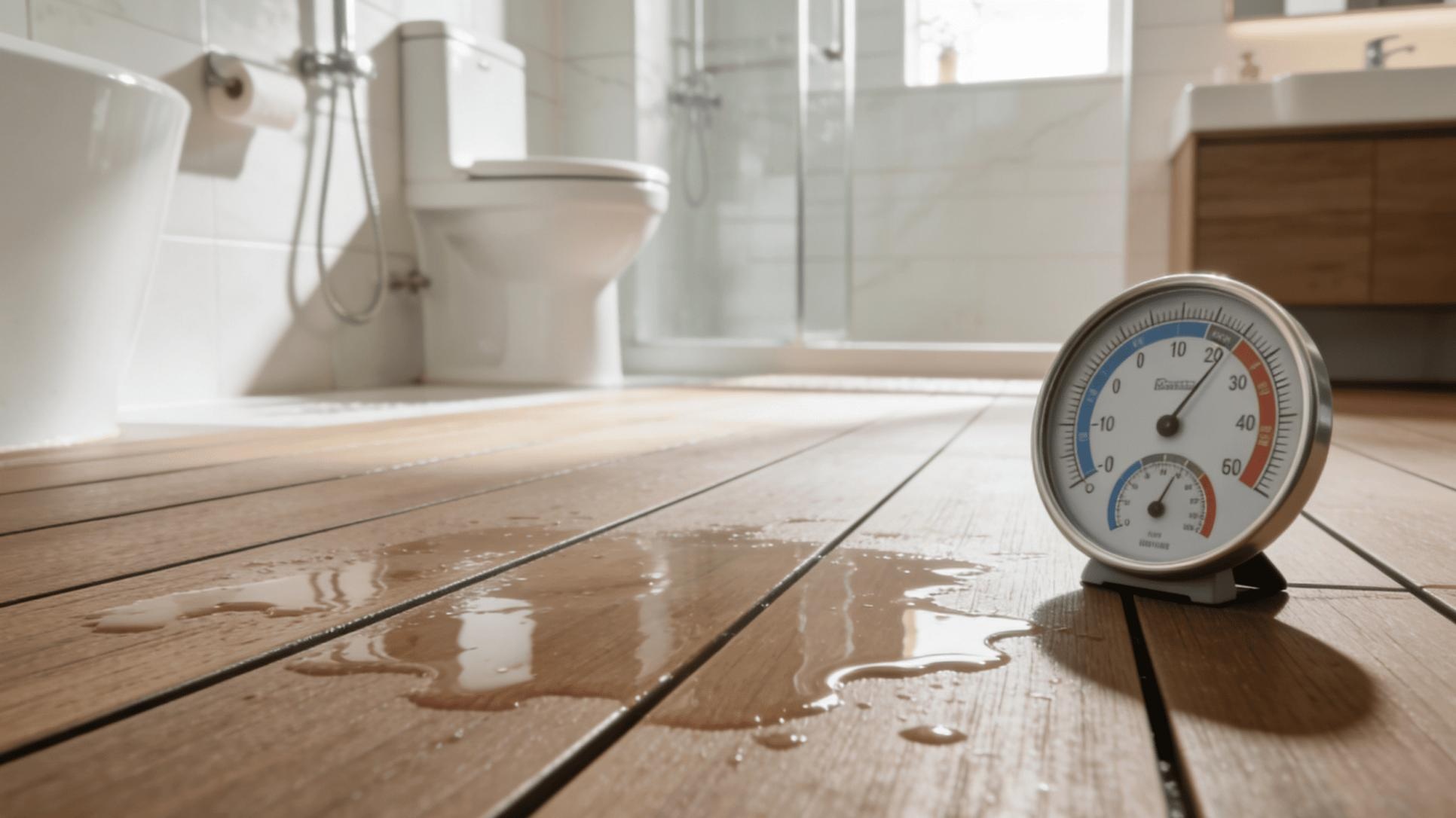
Bathrooms represent one of the most demanding indoor environments, with direct water contact, steam, and frequent temperature changes. WPC wall panels maintain surface integrity under repeated exposure to splashes and condensation, eliminating issues such as peeling finishes or softened substrates.
In kitchens, moisture is combined with grease and temperature fluctuations. WPC panels offer a smooth, easy-to-clean surface that resists staining and moisture penetration. Unlike plaster or wood surfaces that require repainting or resealing, WPC panels maintain appearance and performance with minimal maintenance.
Reliability in Basements and Semi-Outdoor Spaces
Basements often experience persistent humidity due to ground moisture and limited ventilation. Traditional wall systems in these spaces are prone to mold growth behind finishes, even when surface coatings appear intact.
WPC panels reduce this risk by resisting moisture migration and maintaining dimensional stability. When combined with appropriate ventilation strategies, they provide a reliable wall solution for finished basements and utility areas.
In covered patios or transitional spaces, WPC panels outperform plaster and wood by resisting humidity-driven expansion, surface cracking, and biological degradation. This stability ensures consistent appearance and structural performance across seasonal changes.
Installation and Long-Term Maintenance Advantages
From an engineering perspective, moisture-resistant materials must also perform reliably at joints and interfaces. WPC panels typically feature precision-engineered profiles that create tight connections, reducing water ingress at seams.
Maintenance requirements are minimal. Routine cleaning with water or mild detergents is sufficient, eliminating the need for periodic sealing, painting, or antifungal treatments. Over the lifecycle of a building, this translates into reduced maintenance costs and improved durability.
A Practical Wall Solution for Humid Environments
For projects involving wet or humid environments, selecting wall materials with inherent moisture and mold resistance is essential. WPC wall panels provide a balanced solution by combining water repellency, closed-structure stability, and hygienic performance.
Panels designed specifically for interior and semi-exterior applications offer a reliable alternative to traditional plaster and wood systems. When properly installed, they deliver long-term performance, reduced maintenance demands, and consistent visual quality in spaces where moisture control is critical.
主站蜘蛛池模板:
亚洲自拍小说|
国精品无码一区二区三区在线蜜臀|
亚洲欧美色综合影院|
国产a在视频线精品视频下载|
无码人妻中文字幕|
中文字幕亚洲综合久久综合
|
国产精品视频一区二区亚瑟|
免费一区二三区三区蜜桃|
黄色www|
亚洲自拍色综合|
亚洲,变态,制服,综合,中|
日日狠狠久久8888偷偷色|
成人免费亚洲av在线|
亚洲成在人线AV品善网好看|
亚洲无线看天堂av|
亚洲丝袜熟女在线樱桃|
久久久精品2019中文字幕之3|
亚洲国产香蕉视频欧美|
国产午夜片无码区在线观看|
一区777|
国产丰满乱子伦无码专区|
成人aⅴ综合视频国产|
人妻无码一区二区三区免费|
西西444www高清大胆|
综合亚洲伊人午夜网|
国产AV在|
日本无码一区二区|
精品无码国产日韩制服丝袜|
午夜精品久久久久久久爽
|
四季亚洲AV永久无码精品尤物app|
两个人免费视频大全毛片|
久久久久蜜桃精品成人片|
色狠狠色婷婷丁香五月|
欧美人成在线播放网站免费|
制服.丝袜.亚洲.中文.综合懂|
国产94在线 | 亚洲|
普陀区|
在线观看黄A片免费视频|
久久精品日日躁精品|
國产AV天堂|
欧洲码亚洲码的区别入口
|